 how-to
How to Get an Emissions Test in Eagle Mountain (2026 Guide)
Table of Contents
- How to Get an Emissions Test in Eagle Mountain: Step-by-Step
- Utah Emissions Test Requirements You Need to Know
- What to Bring to an Emissions Test in Eagle Mountain
- Emissions Test Duration: How Long Does It Take?
- Mobile Emissions Testing in Eagle Mountain: How It Works
- What Happens If Your Vehicle Fails the Emissions Test
- Frequently Asked Questions
Last Updated: October 8, 2026
How to Get an Emissions Test in Eagle Mountain: Step-by-Step
Getting an emissions test Eagle Mountain drivers need takes about 15 to 30 minutes at a certified station, and you can often complete it without an appointment. This guide from Mobile Emissions Pro walks you through every step, from confirming your vehicle needs a test to renewing your registration the same day.
Utah's emissions program exists to keep air quality in check along the Wasatch Front, and Eagle Mountain sits within the area where testing applies. The Utah Division of Motor Vehicles emissions program oversees the requirement and maintains the list of certified inspection stations.
Below, we'll show you exactly how to move through the process without wasted trips or surprise fees.
Step 1: Confirm Your Vehicle Needs a Test
Most gasoline-powered vehicles registered in Utah County need an emissions test, but there are exceptions. Vehicles powered by diesel, those newer than a certain model year, and certain exempt vehicle types may not require testing.
Check your registration renewal notice first. If the state requires an emissions certificate, it will be noted there. You can also verify your vehicle's status through the Utah DMV registration portal.
A common mistake is assuming a newer car is automatically exempt. Model year cutoffs change, so confirm before you schedule anything.
Step 2: Choose a Testing Option (Station, Mobile, or Dealer)
You have three practical choices in the Eagle Mountain area:
- Certified inspection station: Drive in, wait in line, get your certificate on the spot. Most stations accept walk-ins.
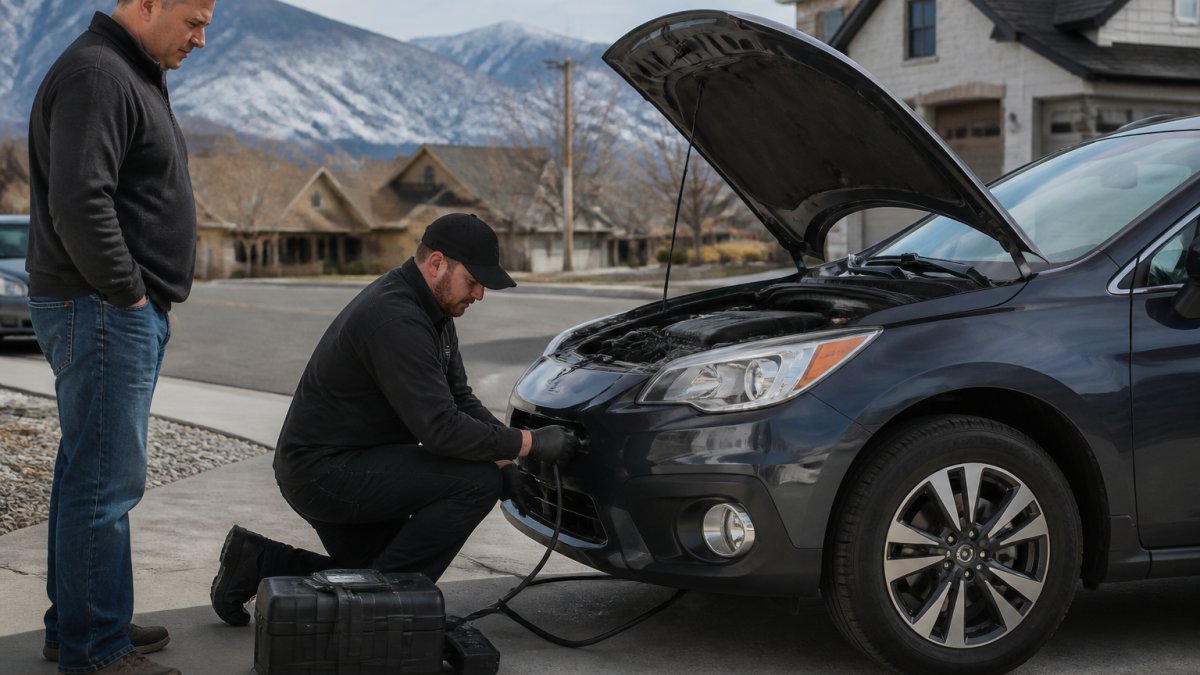
- Mobile emissions testing: A certified technician comes to your home, office, or job site. This works especially well for busy schedules and small fleets.
- Dealership service department: Convenient if your vehicle is already there for other service, but often the slowest option and the most expensive.
For residents in Eagle Mountain and Saratoga Springs, the drive to a traditional station can eat an hour or more of your day. That travel time is the main reason mobile testing has grown in popularity here.
Step 3: Prepare Your Vehicle and Paperwork
Preparation is simple, but skipping it causes most failed tests. Before your appointment:
- Warm up the engine by driving for at least 10 to 15 minutes
- Check that your check engine light is off
- Confirm your registration is current or bring your renewal notice
- Have your vehicle identification number (VIN) handy
- Clear any loose items from the dashboard and passenger area
If your check engine light is on, get the underlying issue diagnosed before testing. A lit light almost always means an automatic fail.
Step 4: Complete the Test and Get Your Certificate
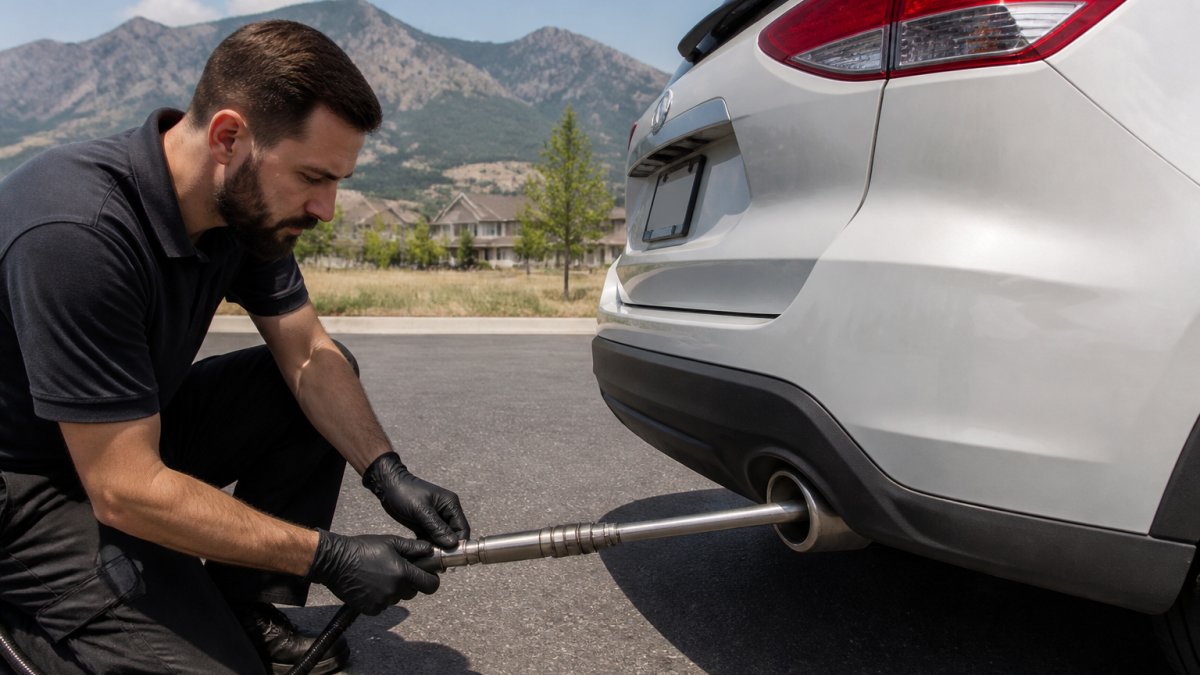
The technician connects to your vehicle's onboard diagnostic system, checks the gas cap, and reviews emissions-related components. If everything passes, you receive a certificate of compliance.
Keep a printed or digital copy for your records. If you're renewing registration at the same time, the station may submit the result directly.
Step 5: Renew Your Registration
With a passing certificate on file, you can renew your registration online, by mail, or in person. Electronic submission means the state sees your result immediately, so online renewal usually takes just a few minutes.
If you tested at a mobile service that offers on-the-spot registration renewal, you can often finish the entire process in one visit.
Utah Emissions Test Requirements You Need to Know
Utah's emissions program is administered by the Utah Division of Motor Vehicles under rules set by the Utah Department of Environmental Quality. The program applies to vehicles registered in designated counties along the Wasatch Front, and Utah County, where Eagle Mountain sits, is inside that zone. Because the rules are set at the state level and enforced at registration, the requirements you'll see on your renewal notice are the same ones a station in Provo follows.
Which Vehicles Need a Test
For a typical Eagle Mountain household, the practical rule is:
- Gasoline and gasoline-hybrid vehicles registered in Utah County generally need an emissions test.
- Model-year cutoff: Utah exempts the newest vehicles from the initial test cycle. As of the current program rules, gasoline vehicles in the first few model years of their life are exempt, and the exemption ages out as the vehicle gets older. The exact cutoff year moves forward each year, so a vehicle that was exempt last year may not be exempt this year. Confirm your specific model year on the DMV site or your renewal notice before assuming you're clear.
- Diesel vehicles follow a separate schedule and, in many cases, are not part of the same gasoline test cycle. Don't assume a diesel pickup needs the same test as a gas sedan.
- Exempt vehicle types typically include motorcycles, certain farm vehicles, vehicles registered outside the designated counties, and some specialty or antique registrations.
How Often Testing Is Required
Most vehicles in the program test on a biennial (every two years) cycle tied to registration renewal. Older vehicles, generally those past a certain age threshold, move to an annual cycle. Your renewal notice states which cycle applies to your VIN, so the notice is the authoritative answer for your car, not a general rule of thumb.
A common mistake is treating the two-year cycle as a fixed calendar. It isn't. The test is tied to your registration expiration, so if you renew late or transfer a plate, the next test date shifts with it.
How the Test Itself Works
For model-year 1996 and newer gasoline vehicles, Utah uses an OBD-II scan, the technician plugs into your vehicle's diagnostic port and reads stored emissions-related trouble codes and readiness monitors. This matters for preparation: an OBD-II test can fail on a stored code even if the check engine light isn't currently lit, and it can fail if recent battery work cleared the readiness monitors before they reset.
What to Bring to an Emissions Test in Eagle Mountain
An emissions test Eagle Mountain drivers schedule is a short transaction, but the paperwork you bring determines whether it's a one-trip errand or a two-trip one. Here's what to have in hand before the technician starts.
The Short List
- Your vehicle registration or current renewal notice. The renewal notice is the single most useful document because it states whether a test is required for your VIN and which cycle applies.
- Your VIN. It's on the registration, the driver's-side door jamb, and the base of the windshield. Having it visible saves the technician a walk-around.
- Payment. Mobile services typically take payment at booking.
- Proof of insurance. Not every station asks, but Utah requires liability insurance to register a vehicle, and a station that submits your result electronically may verify it.
If Your Information Doesn't Match
A mismatch between the name or address on your registration and your current information is the most common reason a passing test doesn't immediately clear for renewal. If you've moved within Eagle Mountain or changed your name, update the registration record with the DMV before you test. The certificate is tied to the VIN and the registered owner, so a stale record can stall the electronic submission even though the vehicle passed.
If You're Retesting After a Failure
Bring the repair receipt or invoice showing what was fixed. Some stations and mobile providers offer a reduced or free retest within a set window, often a short period after the original test, but only if you can show the repair was done. Without the receipt, you may be charged the full fee again. Ask about the retest policy before you pay for the first test, not after.
What You Don't Need
You don't need to bring the vehicle's title, and you don't need a printed certificate in advance. Keep a copy for your own records anyway, especially if you're renewing by mail.
Emissions Test Duration: How Long Does It Take?
An emissions test duration is typically 15 to 30 minutes from arrival to certificate. The actual diagnostic scan takes only a few minutes; the rest is check-in, vehicle prep, and paperwork.
Wait times vary by station and time of day. Weekday mornings tend to move fastest at traditional stations. Mobile testing eliminates the wait entirely because the technician arrives at a scheduled time.
If your vehicle needs a retest after repairs, budget another 15 to 30 minutes.
Mobile Emissions Testing in Eagle Mountain: How It Works
Mobile emissions testing Eagle Mountain residents use works like this: you book online, a certified technician arrives at your home or office with portable testing equipment, and you get your result on the spot. No waiting room, no driving across the county.
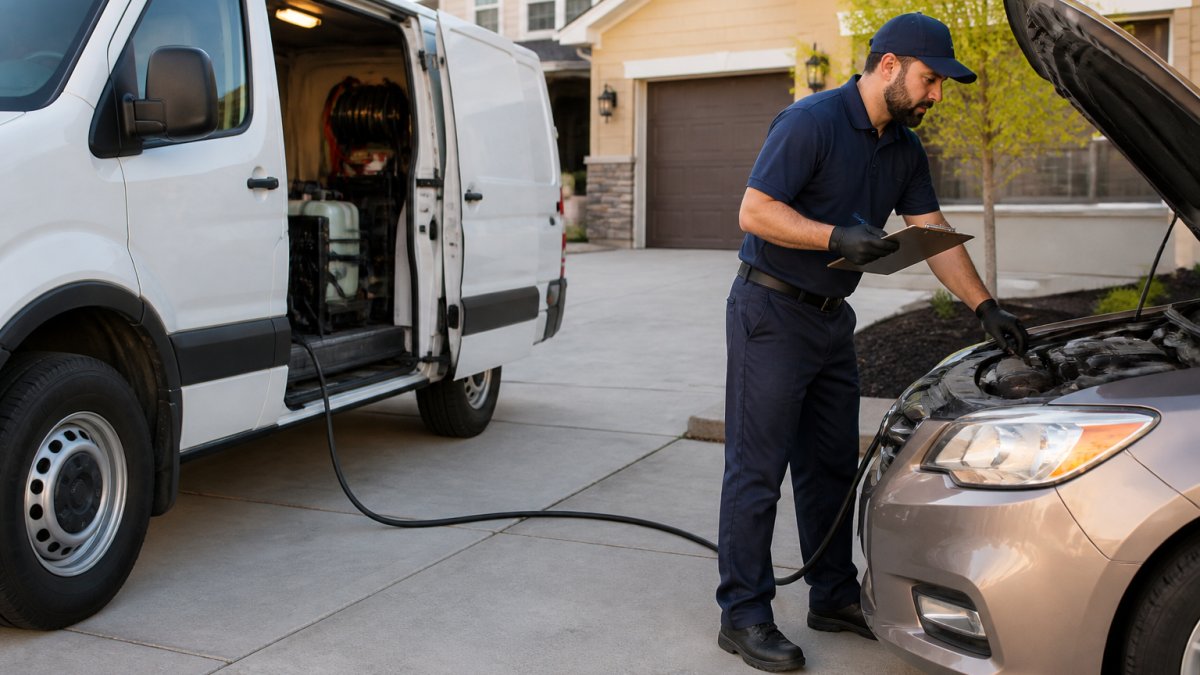
Mobile Emissions Pro brings certified testing directly to your driveway or office parking lot. We handle the full inspection, provide your certificate, and can complete registration renewal on the spot.
This option fits several situations well:
- Busy professionals who can't take time off for a testing center visit
- Parents juggling school runs and work schedules
- Fleet managers who need multiple company vehicles tested in one visit
- Anyone retesting after repairs who wants to avoid a second trip
What Happens If Your Vehicle Fails the Emissions Test
A failed test isn't the end of the road. You can retest after repairs.
Common failure causes include:
- A lit check engine light or stored trouble codes
- A faulty or loose gas cap
- Worn oxygen sensors or catalytic converter issues
- Emissions control components that need replacement
Most vehicles pass on retest once the underlying issue is fixed. Ask about retest policies before you pay.
Frequently Asked Questions
How much does an emissions inspection cost in Eagle Mountain?
Pricing for emissions testing in Eagle Mountain varies by provider. Traditional testing stations and mobile services set their own fees, and costs can differ based on vehicle type and any retest needs. Mobile Emissions Pro does not publish fixed prices because rates depend on factors like service location and fleet size. For current pricing, visit the Mobile Emissions Pro website or request a quote online.
What should I bring to an emissions test in Eagle Mountain?
You will need your vehicle registration and proof of insurance. If you are renewing your registration at the same time, have your renewal notice handy. For mobile emissions testing in Eagle Mountain, ensure your vehicle is accessible and has a valid registration. Bring payment for the test fee.
Can I get an emissions test at home or work in Eagle Mountain?
Yes. Mobile emissions testing in Eagle Mountain brings a certified inspector to your home or office. You schedule an appointment, and the technician performs the test on-site using portable equipment. After passing, you can often renew your registration immediately. This service is ideal for busy professionals, parents, and fleet managers who want to avoid a trip to a testing station.
How long does an emissions test take?
A typical emissions test duration is 15 to 30 minutes once the technician begins. Mobile testing may add a few minutes for setup and paperwork. If you visit a station, factor in wait times, which can be longer during peak hours. Scheduling an appointment or choosing mobile service can reduce your total time commitment.
Getting an emissions test in Eagle Mountain shouldn't cost you half a day. If your schedule is full or your vehicle is due for renewal, Mobile Emissions Pro brings certified testing to your home, office, or fleet lot, with fast results and on-the-spot registration renewal. Book online today and check your current pricing and service availability for your address.