 ultimate-guide
Emissions Testing Requirements for Utah Vehicles
Table of Contents
- Which Utah Vehicles Need Emissions Testing
- Utah Emissions Testing by County
- Utah Vehicle Emissions Test Exemptions
- Utah Emissions Test Cost
- What to Do If a Car Fails Emissions Testing in Utah
- How to Prepare for an Emissions Test and Renew Your Registration
- Frequently Asked Questions
Last Updated: October 5, 2026
Which Utah Vehicles Need Emissions Testing
Emissions testing requirements for Utah vehicles apply to gasoline and diesel vehicles based on model year, vehicle age, and the county where the vehicle is registered. At Mobile Emissions Pro, we help Utah County drivers sort out exactly which rule applies to their car, truck, or fleet vehicle.
The short answer: if your vehicle is registered in a county with an emissions program and it is old enough to fall under the testing window, you need an inspection. Newer vehicles and vehicles registered in counties without a program are generally exempt.
Vehicle Age and Model Year Rules
A vehicle's model year is the year the manufacturer assigns to it, not the calendar year you bought it. That distinction matters, because the testing schedule is built around model years and vehicle age, and the two move at different speeds.
Here is how the counting actually works, using a concrete example:
- A 2026 model year vehicle is treated as brand new for the 2026 calendar year.
- A 2020 model year vehicle is six model years old in the 2026 calendar year, even if you bought it off a lot in 2021.
- A 2019 model year vehicle is seven model years old in the 2026 calendar year, even if it sat on a dealer lot for a year before its first sale.
The rule of thumb most drivers run into: six model years and newer vehicles typically sit inside the grace period, and vehicles older than six model years fall into the regular testing cycle.
Two traps to watch for:
- The model year is on the title and registration card, not the door sticker alone. If those disagree, the registration record is what the testing system reads.
- A used-car purchase does not reset the clock. The model year follows the vehicle, so a 2018 model year car that needed annual testing with its previous owner still needs annual testing with you.
If you are unsure which category your vehicle falls into, check the model year on your title or registration card. That single number decides your testing frequency.
Testing Frequency by Vehicle Age
How often you test depends on how old the vehicle is.
| Vehicle Category | Typical Testing Frequency |
|---|---|
| Newer vehicles within the grace period | No test required yet |
| Vehicles past the grace period | Every two years |
| Older vehicles | Annual testing |
| Vehicles that failed a prior test | Retest required after repairs |
Drivers often assume the schedule resets when they buy a used car. It does not. The model year follows the vehicle, so a car that needed annual testing with its previous owner still needs annual testing with you.
Utah Emissions Testing by County
County requirements vary, and this is where most confusion starts. A vehicle that needs no test in one county may need one every year in another, because emissions programs are tied to air quality conditions in specific areas.
County-by-County Requirements Table
The table below summarizes how county rules generally break down. Always confirm your specific county's current requirements with the state or county office, since program details can change.
| County | Emissions Program | Typical Requirement |
|---|---|---|
| Salt Lake County | Yes | Testing required based on model year and age |
| Davis County | Yes | Testing required based on model year and age |
| Utah County | Yes | Testing required based on model year and age |
| Weber County | Yes | Testing required based on model year and age |
| Counties without a program | No | Generally exempt from emissions inspection |
What the table cannot show is the part that actually trips people up: the program counties do not all use the same age threshold, and the schedule is not identical from one county to the next. A vehicle that is still inside the grace period in one program county can already be on an annual cycle in another.
A few patterns worth knowing before you assume your county matches your neighbor's:
- Program counties cluster in the northern part of the state, where winter inversions concentrate pollutants against the mountains.
- Non-program counties are generally exempt, but the exemption is tied to where the vehicle is registered, not where it is driven.
- A vehicle registered in a program county keeps that county's rules even if the owner spends most of the year elsewhere.
current county-by-county emissions program list and thresholds
Emissions Requirements for Vehicles Registered in Salt Lake County
Salt Lake County operates one of the state's most established emissions programs, driven by the area's air quality challenges. Vehicles registered there generally must pass an inspection on a schedule tied to model year and vehicle age, and the results feed into the registration renewal process.
What most guides miss is that the testing requirement follows the registration, not the driver. A vehicle registered in Salt Lake County needs to meet Salt Lake County rules even if it spends most of its time elsewhere.
Utah Vehicle Emissions Test Exemptions
Several vehicle categories are exempt from inspection under Utah's emissions program. Common exemptions include:
- Vehicles registered in counties without an emissions program
- Newer vehicles still within the model-year grace period
- Certain diesel vehicles, depending on weight and model year
- Motorcycles and some specialty vehicles
- Vehicles used only in limited, non-road capacities
Exemptions are not permanent for most vehicles. A car that is exempt today because it is new will likely need testing once it ages past the threshold. Treat the exemption as a delay, not a permanent pass.
Utah Emissions Test Cost
Emissions test pricing varies by provider, location, and whether the test is bundled with other services. Because costs shift over time, we do not quote a flat figure here. Instead, compare what each provider includes:
- Whether the price covers the test only or includes registration renewal assistance
- Whether a retest after repairs costs extra
- Whether mobile or on-site service carries a premium over a fixed testing center
The cheapest sticker price is not always the lowest total cost. A failed test that requires a second visit and a second fee can erase the savings from a bargain inspection.
What to Do If a Car Fails Emissions Testing in Utah
A failed test is not the end of the road. It is a signal that something in the emissions system needs attention, and Utah gives owners a path to fix it and retest.
- Review the failure report. The report identifies which portion of the test did not pass, which narrows down what to check.
- Get the vehicle diagnosed and repaired. A qualified mechanic can address the underlying issue, whether it is a sensor, a catalytic component, or a maintenance item.
- Keep your repair receipts. Documentation matters if you need to demonstrate that repairs were completed.
- Retest the vehicle. Once repairs are done, the vehicle must be retested to clear the registration hold.
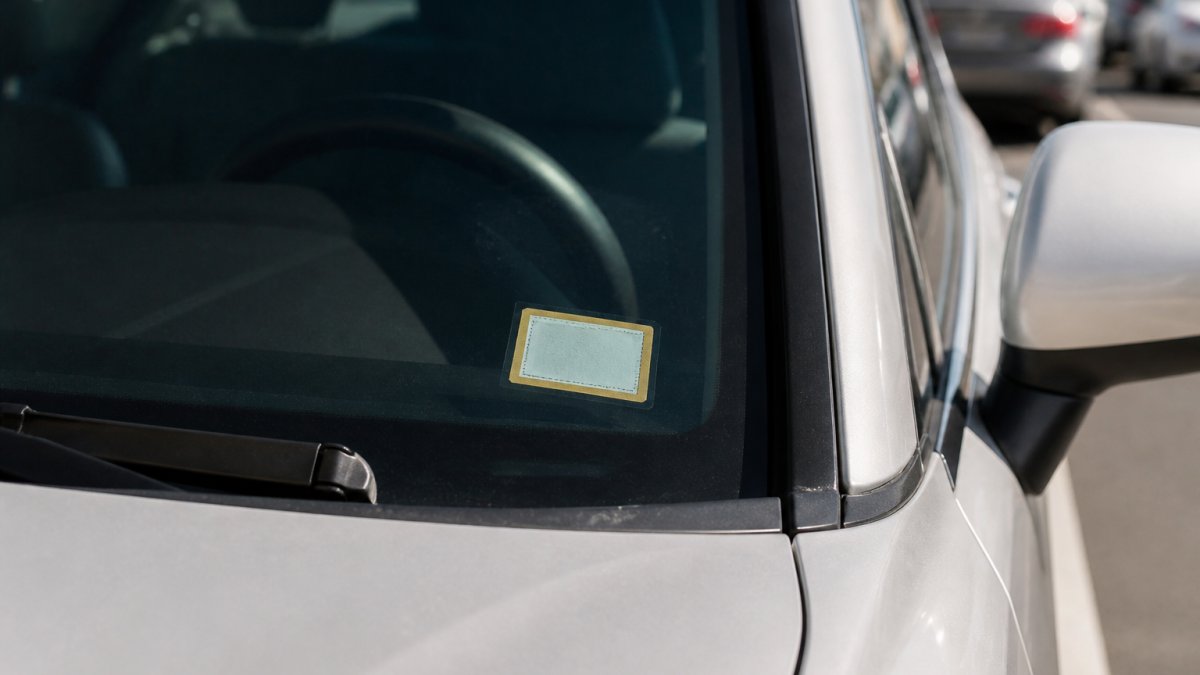
- Renew your registration. With a passing result in hand, you can complete the renewal.
The thing nobody tells you about failed tests is that the retest window matters. Waiting too long can complicate your registration timeline, so schedule the retest as soon as repairs are finished.
How to Prepare for an Emissions Test and Renew Your Registration
Preparation is simple, and it saves repeat trips.
- Confirm your vehicle is due for testing based on model year and county
- Check that your registration is current and your paperwork is in order
- Make sure the check engine light is off; a lit light often means an automatic fail
- Have your vehicle warmed up before the test if the provider recommends it
- Bring your registration card and identification
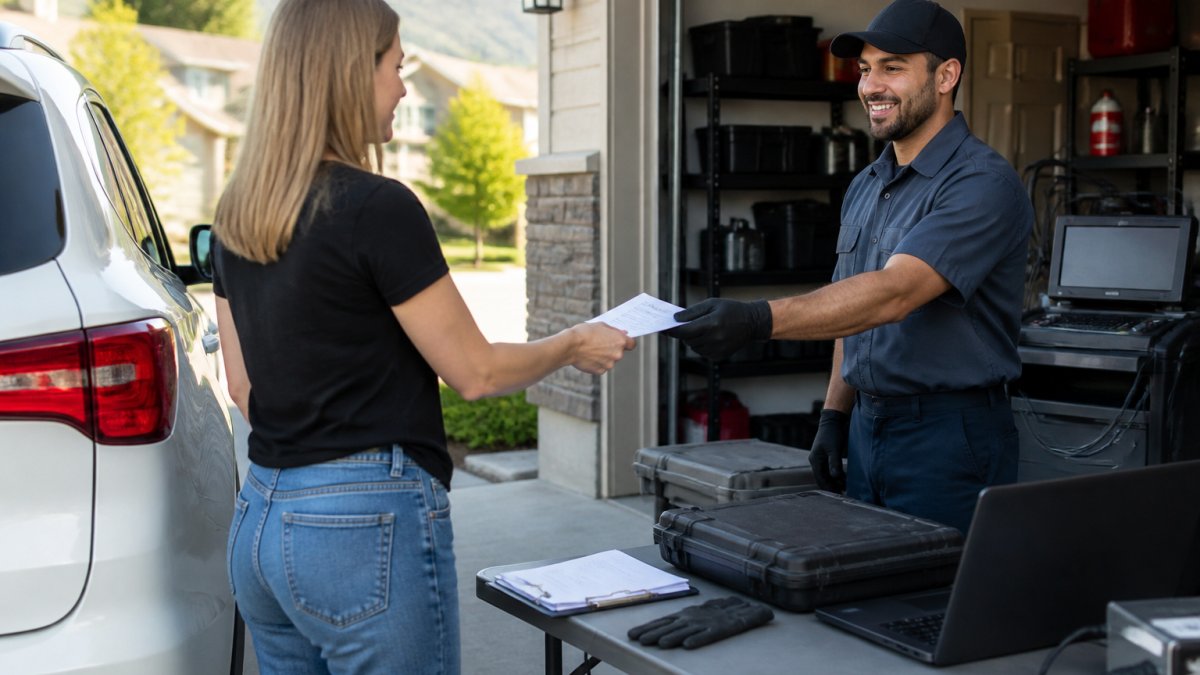
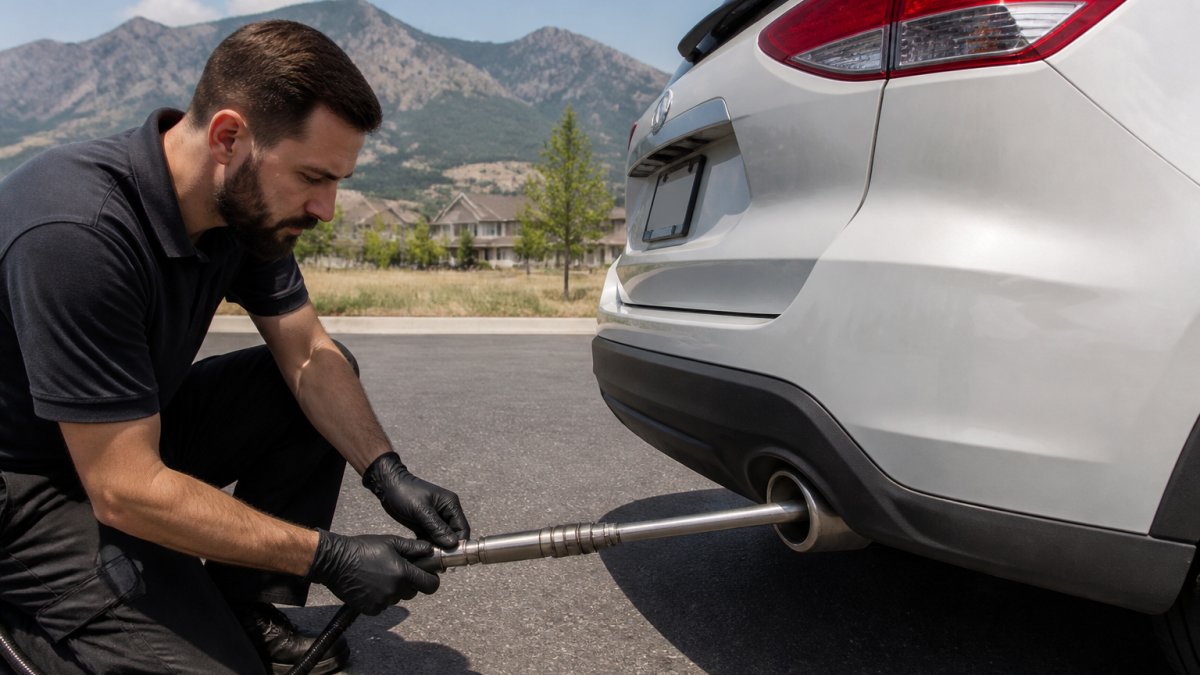
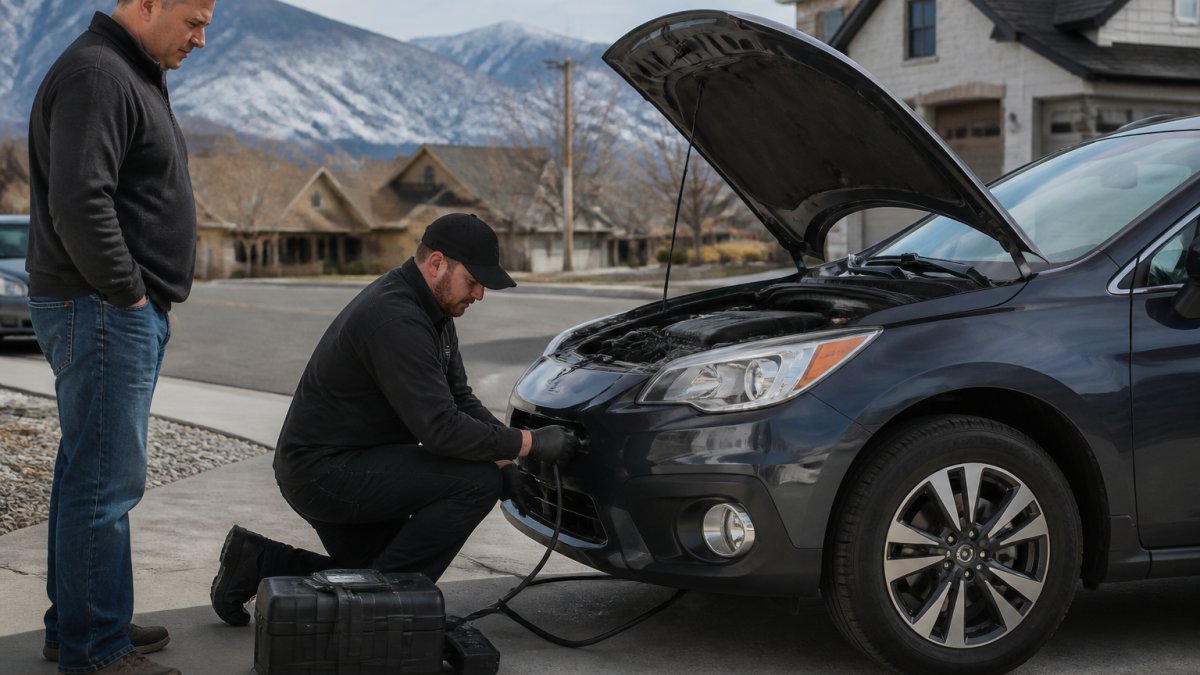
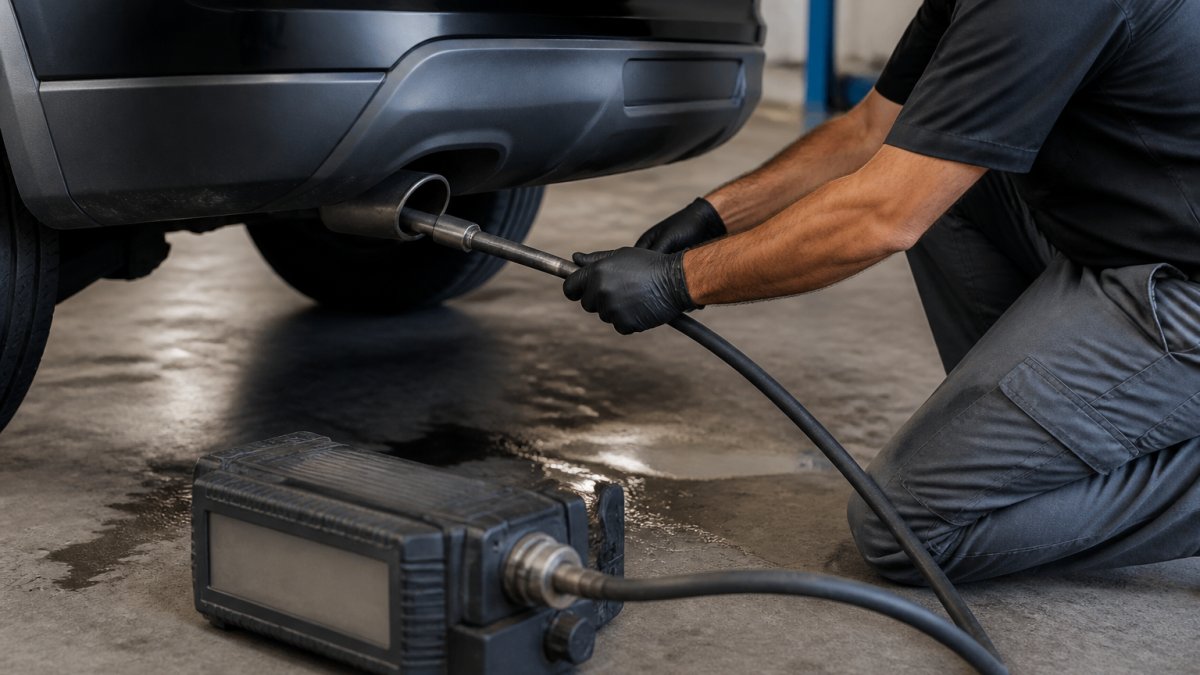
For registration renewal, the emissions result typically must be on file before the renewal is finalized. That is where on-site service changes the experience. Mobile Emissions Pro brings certified testing to your home or office and handles registration renewal on the spot.
If you manage a small fleet, batch your vehicles into one visit. Testing three company cars in a single appointment is far more efficient than three separate trips.
Frequently Asked Questions
Which vehicles need emissions testing in Utah?
Most gasoline and diesel vehicles registered in Utah's emissions counties need testing once they reach a certain age. Gasoline vehicles typically require testing every two years after six model years, while diesel vehicles follow a different schedule. Vehicles registered outside designated emissions counties are generally exempt. Check with the Utah Division of Motor Vehicles for exact model-year and fuel-type rules.
Which Utah counties require vehicle emissions testing?
Emissions testing is required in several counties along the Wasatch Front, including Salt Lake, Davis, Utah, and Weber counties, as well as parts of Box Elder and Tooele. The specific requirements vary by county. For a full county-by-county breakdown, refer to the Utah DMV or your county's emissions program page before your registration renewal.
How often do vehicles need emissions testing in Utah?
Testing frequency depends on vehicle age and model year. Newer vehicles are often exempt for the first few years. After that, gasoline vehicles typically need testing every two years, while some older vehicles may require annual testing. Even- and odd-model-year schedules can also affect when you test. Always confirm your specific schedule with the Utah DMV.
Are any vehicles exempt from Utah emissions testing?
Yes. Exemptions include new vehicles within their first few model years, vehicles registered outside emissions counties, certain diesel vehicles, motorcycles, and some specially registered vehicles. If you believe your vehicle qualifies for an exemption, verify with the Utah DMV or your county assessor before skipping a test.
What should I bring to a Utah emissions test?
Bring your vehicle registration or title, proof of insurance, and payment for the test fee. If you are using a mobile service, have your registration handy and ensure your vehicle is accessible. Some testers may also ask for your driver's license. Having these documents ready speeds up the process and helps with on-the-spot registration renewal.
How much does emissions testing cost in Utah?
The cost of an emissions test in Utah varies by provider and location. Mobile services may charge differently than traditional testing centers. Because pricing depends on the provider and any additional services, check with Mobile Emissions Pro or your local testing center for current rates. Some repairs related to failed tests can add to the overall expense.
What happens if a vehicle fails an emissions test in Utah?
If your vehicle fails, you will receive a report showing which pollutants exceeded limits. You can then have repairs done and retest, often within a set window to avoid paying the full fee again. Some providers offer a free retest if repairs are made by a certified technician. Mobile services like Mobile Emissions Pro can come to you for the retest.
Can I renew my Utah vehicle registration without an emissions test?
If your vehicle is registered in an emissions county and does not qualify for an exemption, you cannot renew your registration without a passing emissions test. The test result is electronically submitted to the DMV. Mobile services can perform the test and help with on-the-spot registration renewal, saving you a trip to the DMV.
Emissions compliance in Utah comes down to three variables: your county, your model year, and your vehicle's age. Get those right and the process is straightforward. Mobile Emissions Pro brings certified testing to your home or office, handles registration renewal on the spot, and works around your schedule instead of the other way around. Book online today and let us handle the trip you would rather skip.