 how-to
Can Mobile Mechanics Perform Emissions Tests?
Table of Contents
- What Is a Mobile Emissions Test?
- Can Mobile Mechanics Legally Perform Emissions Tests?
- Mobile Emissions Testing vs Shop: Which Is Right for You?
- How Mobile Emissions Tests Work: Equipment and Process
- What Happens If My Car Fails Emissions?
- Mobile Mechanic Emissions Repair Cost: What to Expect
- DIY Pre-Check: How to Prepare Your Vehicle for a Mobile Emissions Test
- Conclusion
- Frequently Asked Questions
Last Updated: October 2, 2026
What Is a Mobile Emissions Test?
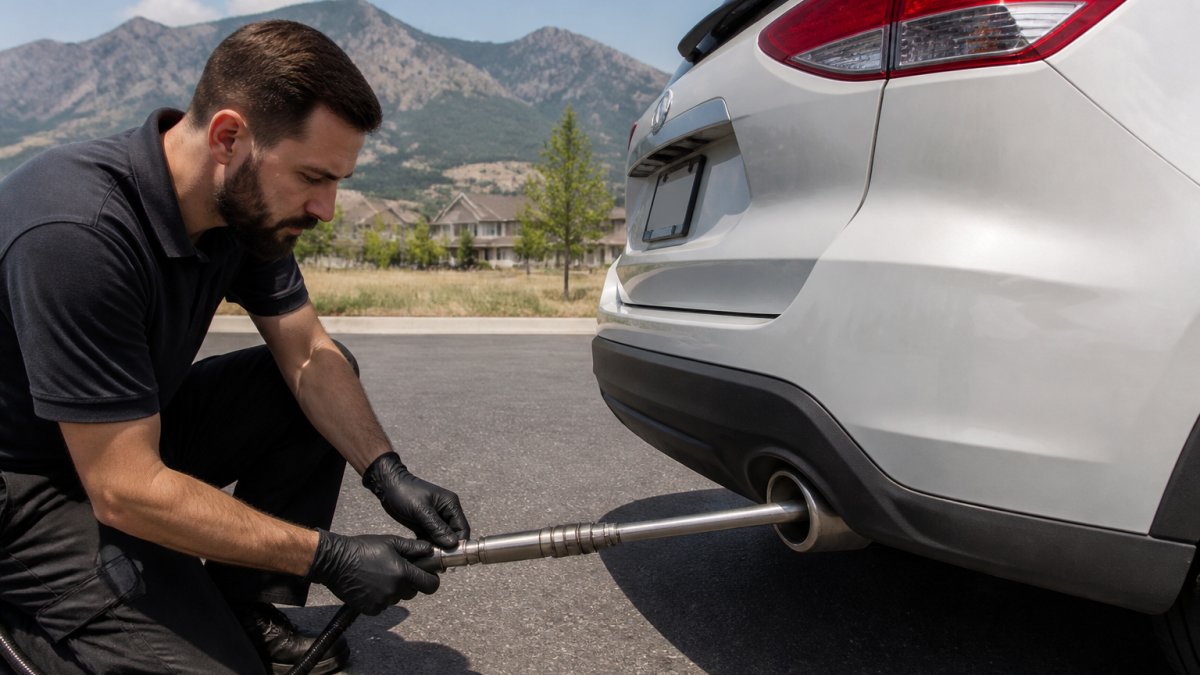
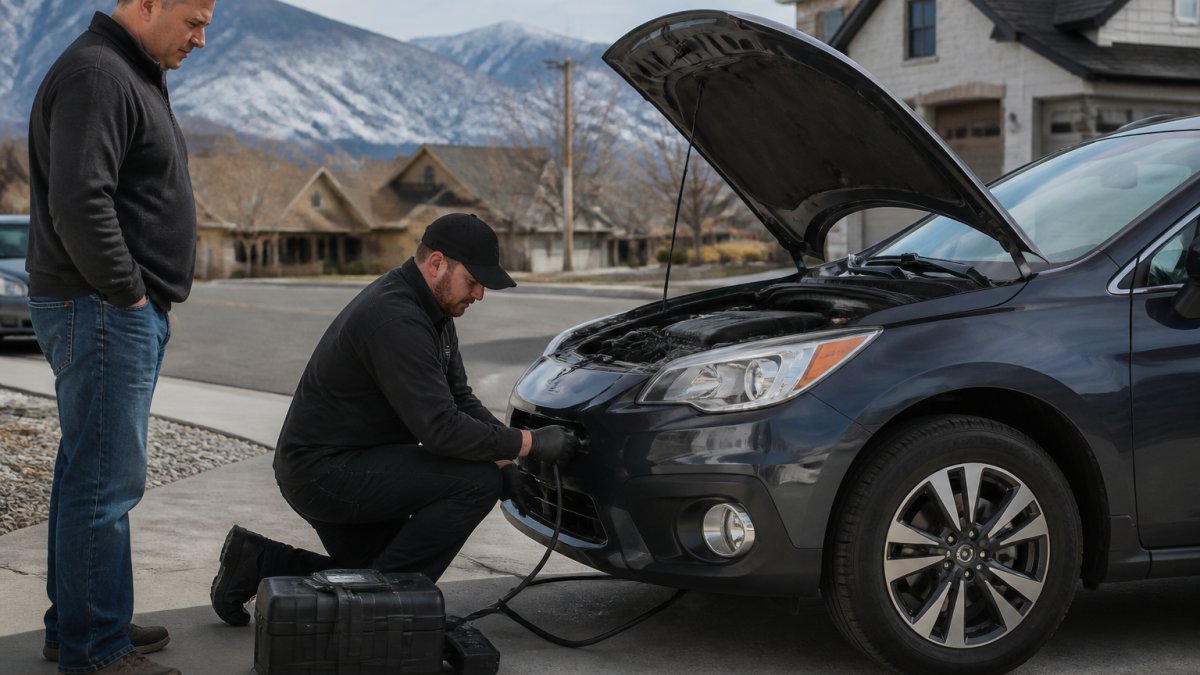
A mobile emissions test is an emissions inspection performed at your home or office instead of at a fixed testing station. A certified technician brings the equipment to you and runs the same checks a shop would run.
That definition matters because "mobile emissions test" gets used loosely. Some people mean a full, state-recognized inspection. Others mean a quick diagnostic scan that reads your car's computer. Those are two different services with two different legal standing.
At Mobile Emissions Pro, we bring certified emissions testing directly to homes and offices across Utah County. The goal is simple: skip the trip to a testing center and still get a valid result.
So can mobile mechanics perform emissions tests? The honest answer is: some can, and only under specific conditions, which is why the exact phrase "can mobile mechanics perform emissions tests" deserves a direct answer. Let's break down exactly what those conditions are.
Can Mobile Mechanics Legally Perform Emissions Tests?
Yes, but only if the mechanic, the equipment, and the vehicle's location all satisfy your state's program rules. A mobile mechanic cannot legally produce an official emissions certificate just by owning a scanner.
Here's the part most people miss. The legality isn't about whether the mechanic is "mobile." It's about which of two regulatory models your state runs.
Centralized (test-only) programs. A single state-contracted operator runs all official tests at dedicated stations. Inspectors are employees or agents of that contractor, and the equipment is owned and calibrated by the program, not the technician. Mobile testing generally does not exist as an option here because the state controls the entire pipeline. Examples of this model include the test-only networks used in parts of California and the contractor-run stations in several Northeast metro areas.
Decentralized (open) programs. The state licenses private businesses and individual inspectors to perform official tests, then audits them. This is where mobile units can exist, because the license attaches to the inspector and the approved equipment, not to a fixed address.
State Certification and Equipment Requirements
Certification is the dividing line between a real test and a courtesy scan. A certified technician has passed the state's inspector exam and works with approved equipment.
Typical requirements include:
- A state-issued inspector license or certification number
- Calibrated emissions testing equipment on the state's approved-equipment list
- A secure connection to the state's reporting system (often a dedicated data terminal or a state-issued app)
- Documented training on OBD-II and, where applicable, tailpipe testing
- A physical or electronic audit trail the state can pull on demand
The Legal Difference Between Testing and Repair
Testing and repair are legally separate activities, and mixing them up causes real confusion. Testing produces an official compliance result. Repair fixes whatever caused a failure.
How to Verify a Mobile Provider Is Actually Certified
Before you book, ask three questions and expect specific answers:
- What is your inspector license number, and which state issued it? A real inspector can produce this immediately.
- Which approved-equipment list is your analyzer on? The state publishes this list; a vague answer means the gear isn't approved.
- How do you transmit results to the state? If the answer is "we email you a PDF," that is a diagnostic report, not an official test.
Mobile Emissions Testing vs Shop: Which Is Right for You?
For most busy drivers, mobile testing wins on convenience while a fixed shop wins on scope. The right pick depends on what your vehicle actually needs.
Here's the trade-off in plain terms:
| Factor | Mobile Testing | Fixed Shop |
|---|---|---|
| Where it happens | Your home or office | Shop location |
| Time cost | Minimal, you stay put | Drive, wait, drive back |
| Best for | Routine compliance, retests | Complex repairs, diagnostics |
| Scheduling | Appointment windows | Walk-in or booked |
| Multi-vehicle jobs | Often one visit | Usually one at a time |
How Mobile Emissions Tests Work: Equipment and Process
The process follows the same core steps whether you're at a shop or in your driveway. Only the location changes.
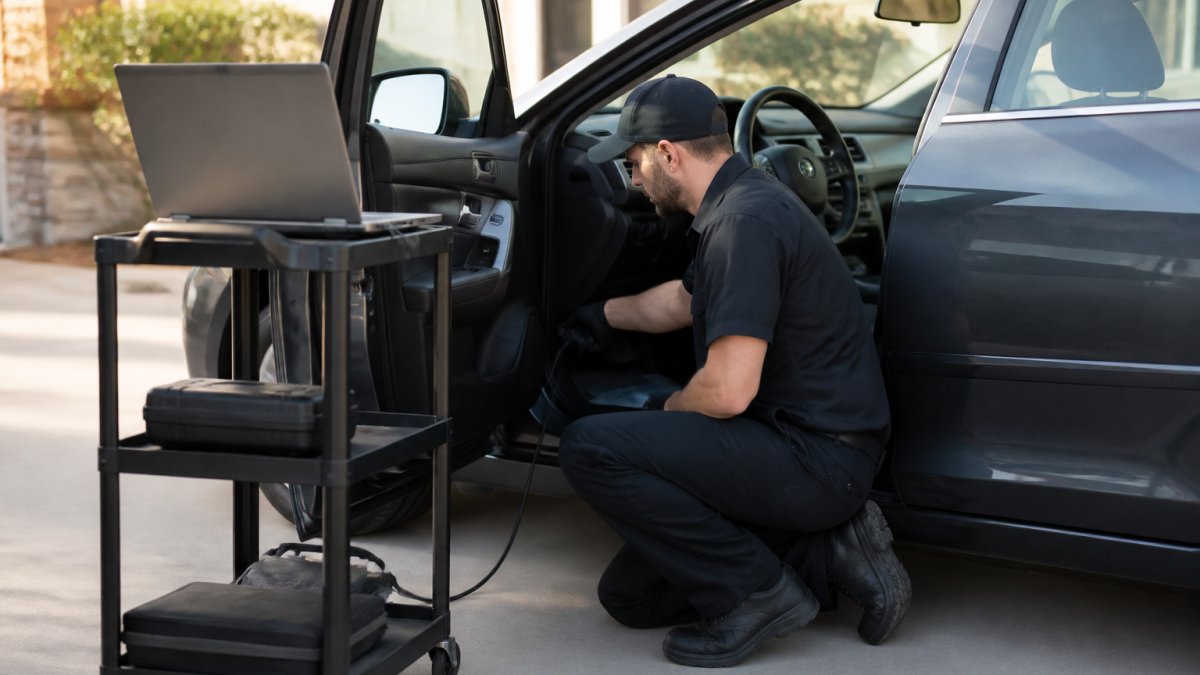
A typical mobile visit runs like this:
- The technician confirms your vehicle details and the test type your state requires.
- They connect an OBD-II scanner to your car's diagnostic port.
- The scanner reads readiness monitors and any stored fault codes.
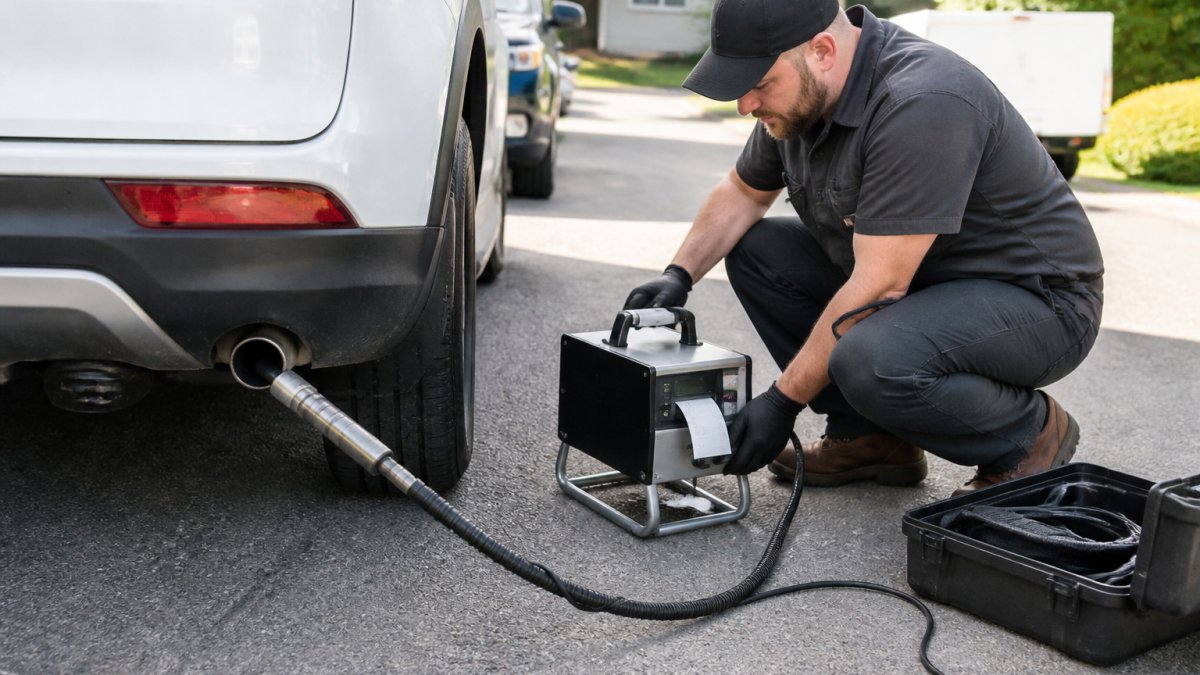
- If your state requires it, a tailpipe probe measures actual exhaust output.
- Results are logged and, where allowed, reported to the state system.
- You get a pass, a fail, or a list of what needs attention.
What Happens If My Car Fails Emissions?
A failed test doesn't mean your car is junk. It means one or more systems didn't meet the standard, and you usually get a chance to fix it and retest.
The common causes of emissions failure include:
- A worn catalytic converter
- A failing oxygen sensor
- An EVAP system leak, often from a loose gas cap
- Engine misfire
- A dead or disconnected battery that cleared readiness monitors
Mobile Mechanic Emissions Repair Cost: What to Expect
Repair pricing depends on what failed, not on whether the mechanic is mobile. A loose gas cap costs almost nothing to fix. A catalytic converter replacement is a major expense.
What drives the final cost:
- The specific part that failed
- Whether it's an OEM or aftermarket part
- Labor time for the repair
- Whether a retest is included
- Whether the repair has to be done at a shop with a lift or can be done in your driveway
Typical Repair Ranges by Failure Type
These are common patterns, not quotes. Actual prices vary by vehicle, region, and shop.
| Failure | Typical Repair Range | Notes |
|---|---|---|
| Loose or faulty gas cap | Under $50 | Often the entire fix; sometimes just a tighten-and-retest |
| EVAP purge valve or vent valve | $100-$300 | Common on older vehicles; usually driveway-serviceable |
| Oxygen sensor (one bank) | $150-$400 | Sensor cost plus labor; some are easy-access, some are not |
| Spark plugs and ignition coils (misfire) | $150-$600 | Depends on engine layout; some engines require intake removal |
| Catalytic converter | $1,000-$2,500+ | The single biggest line item; OEM vs. aftermarket swings the number hard |
| Wiring or PCM fault | $200-$1,000+ | Diagnostic time dominates; parts may be cheap |
What the Test Itself Costs
For the test itself, pricing depends on your state's requirements and the provider's service area. In states with centralized programs, the test fee is set by the state and the same everywhere. In decentralized programs, licensed stations set their own prices, so a mobile provider may charge a convenience premium over a drive-in station. Check the provider's website for current rates and what's included in a visit.
The Waiver Math Most Drivers Miss
Many states offer a repair waiver if you've spent a set amount on emissions-related repairs and still can't pass. The threshold varies by state, but the pattern is consistent: you must document the repairs, use a licensed repair facility, and apply for the waiver through the state, not the inspector.
Two practical points:
- Keep every receipt. A waiver application without itemized repair invoices is almost always denied.
- The waiver is not a pass. It's a one-cycle exemption. You'll still need to fix the underlying issue before the next inspection cycle.
DIY Pre-Check: How to Prepare Your Vehicle for a Mobile Emissions Test
A five-minute pre-check can save you a wasted appointment. Most avoidable failures come down to a handful of simple issues.
Run through this list before your test:
- Tighten your gas cap until it clicks
- Check that your check engine light is off
- Confirm your battery hasn't been disconnected recently
- Drive a mix of city and highway miles to set readiness monitors
- Check tire pressure and basic engine health
- Clear any obvious warning lights, or get them diagnosed first
Conclusion
The rules around mobile emissions testing are confusing, and that confusion costs people time. The key is knowing whether your provider is certified for official testing in your state, not just whether they can scan your car.
Frequently Asked Questions
Can mobile mechanics legally perform emissions tests?
It depends on your state. Some states allow certified mobile providers to perform official emissions tests if they use state-approved equipment and are licensed. Others require testing at a fixed station. Always confirm that the provider is certified and that your state accepts mobile results for vehicle registration renewal.
How does mobile emissions testing compare to traditional testing centers?
Mobile emissions testing brings the test to your home or office, saving you a trip and wait time. Mobile tests use the same OBD-II scanners and readiness monitors as shops. If you value convenience and have a busy schedule, mobile testing is often a great solution. Check with the provider about certification and state acceptance.
What happens if my car fails emissions during a mobile test?
If your car fails, the technician will provide the diagnostic trouble codes and explain the likely causes, such as a faulty oxygen sensor or catalytic converter. You'll need to have the vehicle repaired and retested. Ask about their retest policy before booking.
How much does a mobile mechanic charge for emissions repair?
Mobile mechanic emissions repair cost varies based on the fault and your location. Common repairs like replacing an oxygen sensor or fixing a vacuum leak may cost less than major work like a catalytic converter replacement. Get a written estimate before work begins. For accurate pricing, contact Mobile Emissions Pro or a certified mobile mechanic directly.